

Building Trust Beyond Borders: The Lasting Value of Studying in the UK
In an increasingly interconnected world, the value of education extends far beyond academic qualifications. Today, education is not simply about acquiring knowledge or securing professional opportunities; it is also about building relationships, understanding different cultures, developing global perspectives, and establishing connections that can shape the future of individuals, businesses, and nations.
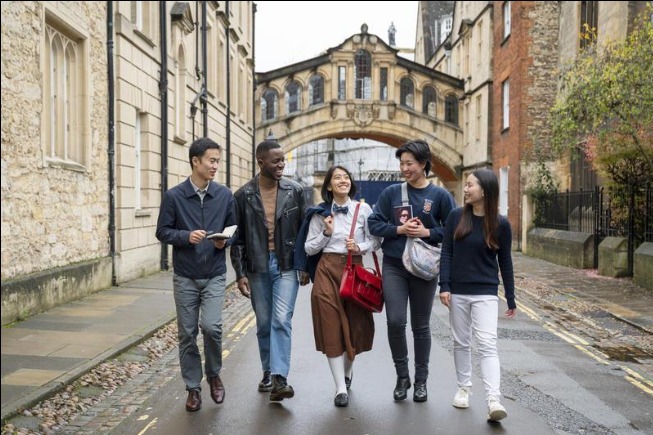
Studying in the United Kingdom offers an experience that goes well beyond the classroom. For thousands of international students every year, the UK provides an opportunity to engage with a diverse academic environment, experience different perspectives, and become part of a global community whose influence often continues long after graduation.
More importantly, a UK education creates something that cannot easily be measured by certificates or academic transcripts: trust across borders.
Education as a Bridge Between Nations
Education has always played an important role in bringing people and societies together. However, in today’s global economy, its significance has become even greater.
The United Kingdom has a longstanding reputation as an international centre for higher education, attracting students from different countries, professional backgrounds, and cultural environments. This diversity creates an atmosphere where individuals are encouraged to exchange ideas, challenge assumptions, and develop a deeper appreciation of the world around them.
When students from different parts of the world study together, they are not simply sharing lecture rooms. They are building relationships, learning to appreciate different approaches to problem-solving, and developing the cultural intelligence required to operate effectively in international environments.
These experiences become particularly valuable in leadership, entrepreneurship, diplomacy, and international business, where the ability to understand people from different backgrounds is essential.
A degree may open the first door, but the relationships developed during the educational journey can open many more.
The Power of Cultural Understanding and Global Connections
One of the most enduring benefits of studying in the UK is the opportunity to develop meaningful international relationships.
Living and studying in a multicultural environment exposes students to different ways of thinking, communicating, working, and approaching challenges. It encourages adaptability, tolerance, collaboration, and a willingness to engage with perspectives beyond one’s immediate environment.
These qualities are increasingly important in a world where businesses operate across multiple jurisdictions, organisations collaborate internationally, and leaders must navigate complex cultural and economic realities.
A student who builds friendships and professional relationships with people from different countries is gradually developing a network that may become valuable throughout their career.
These connections can lead to business partnerships, professional collaborations, research opportunities, investment relationships, and even future institutional cooperation.
The British Council’s research on international student mobility has highlighted that studying in the UK can strengthen cross-cultural understanding, develop international networks, and increase trust and positive perceptions between countries.
This demonstrates that international education is not merely an individual investment. It is also an investment in stronger relationships between societies.
Beyond the Degree: Developing Global Leadership
The modern world requires leaders who can think beyond geographical boundaries.
Whether in business, government, technology, finance, healthcare, or entrepreneurship, successful leadership increasingly depends on the ability to understand international markets, appreciate cultural differences, and work effectively with people from diverse backgrounds.
A UK education can contribute significantly to developing these capabilities.
The British academic environment places considerable emphasis on independent thinking, research, critical analysis, intellectual curiosity, and the ability to communicate ideas effectively. These skills help students become more confident decision-makers and more adaptable professionals.
Equally important is the experience of navigating a new environment. Living in another country requires individuals to become more independent, manage unfamiliar situations, and develop the confidence to engage with new people and institutions.
Such experiences can shape character and strengthen leadership qualities that remain valuable long after formal education has ended.
For aspiring executives and entrepreneurs, this exposure can be particularly transformative. It provides an opportunity to observe different business cultures, understand international standards, and appreciate how organisations operate in diverse economic environments.
The Long-Term Value of International Professional Networks
One of the most underestimated advantages of studying abroad is the professional network created during the experience.
University relationships often evolve into lifelong professional connections. Former classmates become business executives, consultants, researchers, entrepreneurs, policymakers, and industry leaders across different parts of the world.
Over time, these relationships can create opportunities that extend far beyond the original purpose of studying.
For example, an individual who studied in the UK and later establishes a business in their home country may find valuable opportunities through relationships developed with former classmates, lecturers, university institutions, and professional colleagues.
These networks can facilitate knowledge exchange, international partnerships, market access, and cross-border collaboration.
The British Council’s 2026 Alumni Voices research provides further evidence of this lasting value. Its survey of 4,140 UK-educated alumni across 130 countries found that nearly three-quarters had maintained contact with people they first met during their UK studies in the preceding year.
This reinforces an important point: the value of international education does not end at graduation. In many cases, it becomes more significant as individuals progress in their professional and personal lives.
Strengthening Business Relationships and International Trust
Trust remains one of the most important foundations of successful business relationships.
In international business, organisations must often work with partners they have never previously encountered, operate in unfamiliar markets, and navigate different regulatory and cultural environments.
Having a genuine understanding of different societies can make these interactions more productive.
Individuals who have experienced international education are often better positioned to appreciate cultural expectations, communicate across differences, and build relationships based on mutual understanding.
For business leaders, this represents an important advantage.
Studying in the UK can provide exposure to international business practices, professional standards, academic research, and diverse approaches to innovation. It can also create personal connections that make future international engagement more accessible.
However, the greatest value lies not simply in having international contacts, but in developing relationships built on credibility, shared experiences, and mutual respect.
In this sense, education becomes a powerful instrument for building trust between businesses, institutions, and countries.
The Contribution to Home Countries
The benefits of studying in the UK are not limited to the individual or the country hosting the student. They also extend to the countries from which international students originate.
When students return home, they bring back knowledge, professional experience, new perspectives, and international relationships.
They may contribute to improving local institutions, establishing businesses, introducing new technologies, strengthening professional standards, or mentoring the next generation.
Others may remain internationally connected, facilitating trade, investment, research, and institutional partnerships between their home countries and the UK.
For emerging economies, these connections can be particularly valuable.
Internationally educated professionals can help bridge knowledge gaps, encourage innovation, and connect local opportunities with global expertise.
The lasting impact of international education is therefore best understood as a two-way exchange. Students gain knowledge and experience, while their home countries benefit from the skills, relationships, and perspectives they develop.
A Lasting Investment in People, Relationships and Opportunity
Choosing to study in the UK is an important decision that requires careful consideration of academic objectives, financial commitments, career aspirations, and personal circumstances.
It should not be viewed simply as an opportunity to obtain a foreign qualification. Rather, it should be considered a strategic investment in personal development, professional advancement, and international exposure.
The true value of the experience is reflected in what individuals become capable of achieving afterwards: the businesses they establish, the institutions they strengthen, the partnerships they create, the communities they serve, and the relationships they maintain across borders.
As global competition increases and international cooperation becomes more important, individuals who combine professional competence with cultural awareness and international experience will continue to play an important role in shaping the future.
Conclusion: Education That Builds a More Connected World
The lasting value of studying in the United Kingdom lies in its ability to bring together knowledge, opportunity, people, and perspectives from across the world.
A qualification can demonstrate academic achievement, but the experience of international education can develop something much broader: confidence, cultural understanding, professional relationships, and the ability to build trust across geographical and cultural boundaries.
In the final analysis, the most valuable outcome of studying abroad may not be the degree itself, but the doors it opens, the relationships it creates, and the positive influence graduates can have in different parts of the world.
Building trust beyond borders begins with investing in people. And education remains one of the most powerful ways to make that investment count.
Source: British Council