

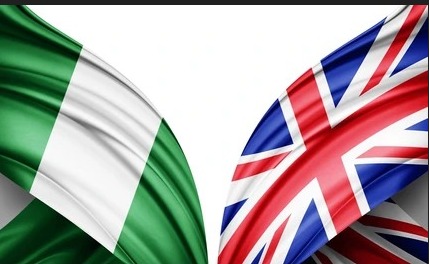
High-Level Diplomatic Engagement: Nigerian President to Visit UK, Opening Doors for Economic and Trade Discussions.
The President of Nigeria, Bola Tinubu, will undertake a state visit to the United Kingdom this March. It will be the first visit of its kind by a Nigerian head of state in nearly four decades.
According to Buckingham Palace, President Tinubu and First Lady Oluremi Tinubu will be hosted by King Charles III and Queen Camilla at Windsor Castle on March 18–19.
State visits are ceremonial by tradition. However, they are strategic by design. Beyond the formal welcome, carriage procession and state banquet, the visit is expected to include meetings with U.K. Prime Minister Keir Starmer and senior government and business leaders.
For executives and policymakers, this signals more than diplomacy. It points to a renewed commitment to economic engagement between two long-standing partners.
The visit also carries historical weight. The last Nigerian leader to make a state visit to Britain was Ibrahim Babangida in 1989. Earlier visits were made by Yakubu Gowon in 1973 and Shehu Shagari in 1981.
The long gap reflects how global political and economic priorities have changed. It also explains why this moment is drawing attention in both capitals.
Strategic Implications for Business and Investment
For business leaders, the real story lies in the economic agenda behind the ceremony. In late 2024, Nigeria and the U.K. formalized a new strategic partnership. The agreement focuses on trade, investment, security, climate policy and migration management.
The U.K. remains one of Nigeria’s largest sources of foreign direct investment. British firms have a strong presence in financial services, energy, infrastructure and technology. Nigeria, in turn, is one of Britain’s most important commercial partners in Africa.
President Tinubu’s administration is pursuing major economic reforms at home. These include currency restructuring, fiscal adjustments and policies designed to attract international capital. The state visit provides an opportunity to reinforce investor confidence. It also allows both countries to deepen institutional and commercial ties at a time when global capital is more cautious.
Security and regional stability are also likely to feature in discussions. Nigeria plays a central role in West Africa and remains influential within the Commonwealth. Stable governance and security cooperation affect investor confidence, supply chains and long-term planning. These issues matter to multinational firms and local enterprises alike.
The key message is clear. High-level diplomacy often precedes commercial expansion. State visits create visibility. They reduce uncertainty and open doors for dialogue between governments and private-sector leaders.
New bilateral agreements or sector-specific partnerships may emerge from this engagement. Expanded trade frameworks are also possible. The outcomes could shape Nigeria–UK economic relations for years to come.
As global markets continue to shift, relationships like this highlight the growing link between diplomacy and business. In today’s fragmented economy, diplomacy is increasingly used as a competitive tool. For emerging markets such as Nigeria, state visits are not symbolic rituals. They are practical instruments for attracting capital and building strategic alignment.
Source: AP News