

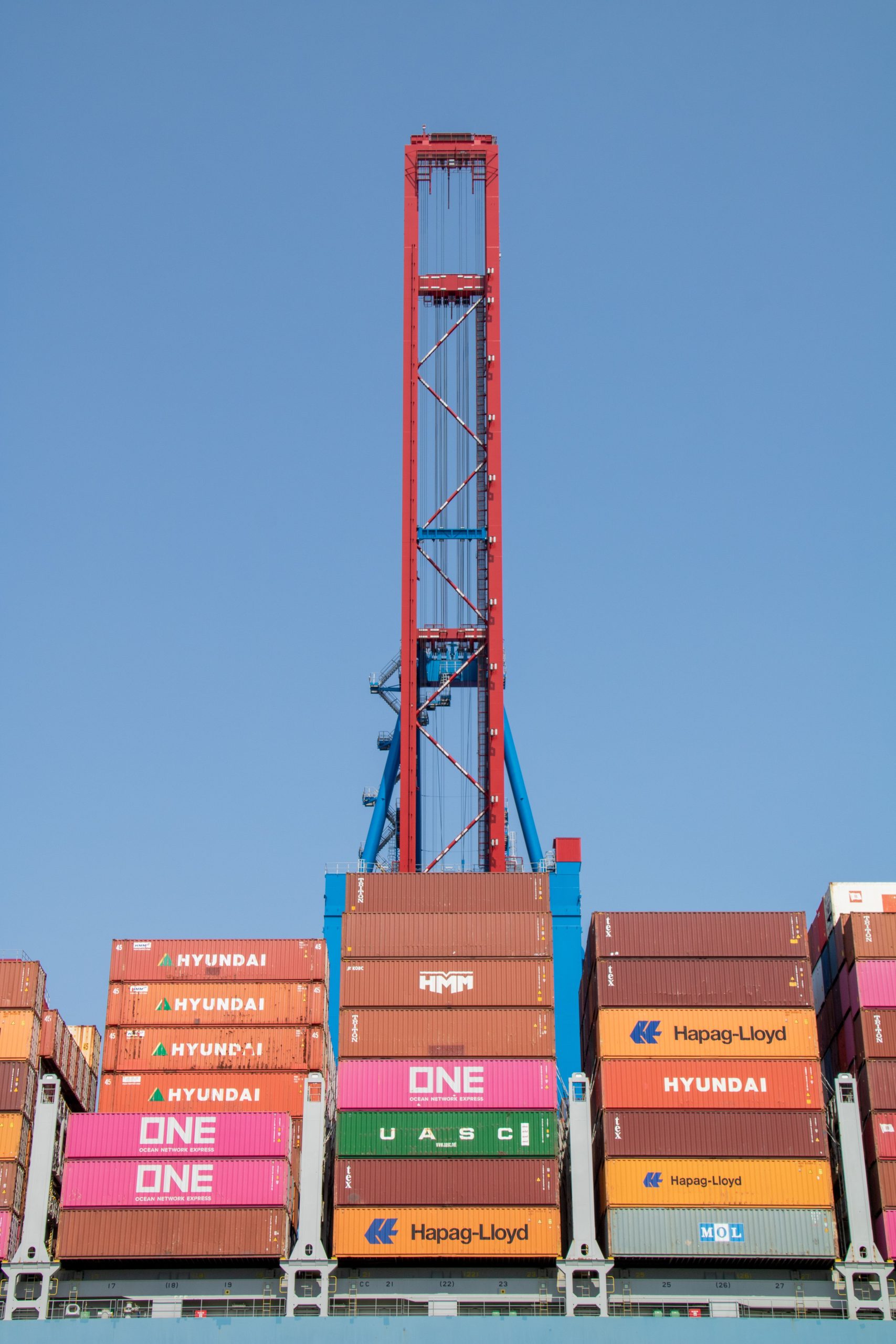
The Executive Guide to Logistics and Supply Chain Management
In today’s competitive business environment, organizations are under constant pressure to reduce costs, improve efficiency, respond quickly to market changes, and deliver greater value to customers. Two functions that play a critical role in achieving these objectives are logistics and supply chain management (SCM).
Although the terms are often used interchangeably, logistics and supply chain management are not the same. Logistics focuses primarily on the movement, storage, and management of goods, while supply chain management takes a broader, end-to-end view of how products, information, and resources move from suppliers to the final customer.
For business leaders and managers, understanding this distinction is essential for making better operational decisions and building resilient, competitive organizations.
What Are Logistics and Supply Chain Management?
Both logistics and supply chain management are concerned with the efficient flow of goods, services, information, and resources. However, they operate at different levels.
Logistics concentrates on the efficient movement and storage of products. It includes activities such as transportation, warehousing, inventory control, packaging, and order fulfillment.
Supply chain management, on the other hand, coordinates a much broader network. It connects suppliers, manufacturers, distributors, retailers, and customers to ensure that products are sourced, produced, moved, and delivered efficiently and cost-effectively.
A useful way to understand the relationship is to think of logistics as one important component of supply chain management.
What Is Logistics?
Logistics is the planning, implementation, and control of the efficient movement and storage of goods, services, and related information.
Its central objective is straightforward: getting the right product to the right place, at the right time, in the right condition, and at the right cost.
Logistics generally consists of two major areas:
- Inbound logistics: Managing the movement of materials and products into an organization, including receiving, transportation, and storage.
- Outbound logistics: Managing the movement of finished products from the organization to distributors, retailers, or end customers.
Effective logistics ensures that products move smoothly through the organization while minimizing delays, damage, unnecessary handling, and costs.
What Is Supply Chain Management?
Supply chain management is a broader management discipline that coordinates the activities involved in sourcing, production, distribution, and delivery.
SCM extends beyond the boundaries of a single organization. It requires collaboration among suppliers, manufacturers, logistics providers, distributors, retailers, and customers.
A supply chain manager may therefore be responsible for decisions involving:
- Supplier selection and relationship management
- Procurement and sourcing
- Production planning
- Inventory management
- Transportation and distribution
- Demand forecasting
- Warehousing
- Customer fulfillment
- Risk management
- Supply chain technology and data
The objective is not simply to move products efficiently, but to optimize the performance of the entire supply network.
Logistics vs. Supply Chain Management: The Key Difference
The simplest distinction is one of scope.
Logistics focuses on the movement and storage of goods within specific stages of the supply chain. Supply chain management looks at the entire system—from sourcing raw materials to production, distribution, and final delivery.
For example, a logistics manager may determine the most efficient way to transport finished products from a warehouse to customers.
A supply chain manager may look at the bigger question: Where should the product be manufactured? Which suppliers should be used? How much inventory should be maintained? What transportation strategy provides the best balance of cost, speed, and reliability? And how can the organization respond if demand suddenly changes?
In this sense, logistics is an operational component of a much broader supply chain strategy.
Key Components of Supply Chain Logistics
Effective logistics management brings together several interconnected activities:
1. Inventory Management
Organizations need sufficient inventory to meet customer demand without tying up excessive capital in stock.
Real-time inventory visibility helps managers make better purchasing and production decisions, reduce stockouts, and avoid unnecessary overstocking.
2. Warehousing
Warehousing involves much more than storing products. Modern warehouse operations include receiving, put-away, picking, packing, order processing, and shipping.
Efficient warehouse management can significantly influence operating costs and customer service levels.
3. Storage
Strategic storage ensures that products are available where and when they are required. Effective storage practices also help organizations make better use of available space.
4. Material Handling
Material handling involves the physical movement, protection, and control of goods throughout manufacturing, warehousing, and distribution activities.
Efficient material handling can reduce damage, improve productivity, and minimize unnecessary movement.
5. Packaging and Unitization
Packaging protects products during storage and transportation while also supporting efficient handling.
Unitization involves combining smaller items into larger, manageable loads, making products easier and more economical to store, handle, and transport.
6. Transportation
Transportation connects different stages of the supply chain. Depending on the product, destination, urgency, and cost requirements, organizations may use road, rail, air, or sea transportation.
The challenge for managers is to balance cost, speed, reliability, capacity, and customer expectations.
7. Inventory Control
Inventory control focuses on maintaining appropriate stock levels and ensuring accurate information about what is available, where it is located, and when it needs to be replenished.
Techniques such as the Economic Order Quantity (EOQ) model can support better replenishment decisions and help control inventory-related costs.
Why Effective Logistics Management Matters
Logistics is not simply an operational function. It can have a direct impact on an organization’s financial performance, customer experience, and ability to grow.
1. Greater Supply Chain Visibility
Effective logistics systems provide managers with better visibility into inventory, transportation, warehouse activities, and order fulfillment.
Greater visibility enables organizations to identify inefficiencies, anticipate potential disruptions, manage costs, and make more informed strategic decisions.
2. Lower Operating Costs
Efficient transportation planning, inventory management, warehouse utilization, and order fulfillment can reduce unnecessary operating expenses.
For executives, even small improvements across high-volume operations can translate into significant financial savings.
3. Improved Customer Experience
Customers increasingly expect products to be available and delivered accurately and on time.
Reliable logistics supports faster and more accurate fulfillment, contributing to customer satisfaction, retention, and long-term brand loyalty.
4. Stronger Inventory Management
Accurate inventory information helps organizations reduce stock discrepancies, prevent stockouts, and avoid holding more inventory than necessary.
This is particularly important because excess inventory ties up working capital, while insufficient inventory can result in lost sales and dissatisfied customers.
5. Support for Business Growth
As businesses expand into new markets, their logistics requirements become more complex.
Effective logistics systems enable organizations to scale their warehousing, transportation, procurement, and distribution capabilities without allowing operational complexity to undermine performance.
6. Greater Agility and Resilience
Market conditions can change rapidly. Demand fluctuations, supplier disruptions, transportation challenges, and other unexpected events can affect operations.
Organizations with strong logistics and supply chain capabilities are better positioned to respond quickly while maintaining service levels and controlling costs.
The Role of Technology in Modern Logistics
Technology is transforming how organizations manage warehouses and supply chains.
One important example is the Warehouse Management System (WMS). A WMS is specialized software that helps organizations coordinate warehouse activities from the receipt of goods through storage, picking, packing, and dispatch.
For business leaders, the value of a WMS extends beyond warehouse automation. It can provide the visibility and data required to make better operational decisions.
How a WMS Can Improve Performance
Greater inventory accuracy:
A WMS can provide real-time visibility into inventory levels, locations, and movements, helping reduce discrepancies and improve stock control.
Better use of warehouse space:
Intelligent storage allocation can help organizations maximize available space while ensuring frequently accessed products remain easy to retrieve.
Higher workforce productivity:
By directing employees toward efficient picking routes and prioritizing tasks, a WMS can reduce unnecessary movement and improve warehouse productivity.
Improved forecasting and decision-making:
Warehouse data and analytics can help managers identify demand patterns and make more informed inventory and replenishment decisions.
Lower operating costs:
Reducing picking errors, unnecessary handling, and inefficient workflows can lower labor costs and minimize expensive returns or reshipments.
Improved documentation and compliance:
Automated records and documentation can reduce administrative workloads, minimize errors, and support regulatory requirements.
Moving from Logistics Efficiency to Supply Chain Excellence
While logistics optimization can improve individual operations, executive leaders should take a broader view.
The real opportunity lies in connecting procurement, production, inventory, logistics, technology, suppliers, and customers into an integrated supply chain strategy.
Organizations that treat these functions independently may optimize one part of the business while creating inefficiencies elsewhere. For example, reducing transportation costs may increase delivery times, while minimizing inventory may increase the risk of stockouts.
Supply chain management encourages leaders to consider these trade-offs and optimize performance across the entire network.
What Business Leaders Should Take Away
The distinction between logistics and supply chain management is more than a matter of terminology.
Logistics is primarily concerned with the efficient movement and storage of goods. Supply chain management takes a strategic, end-to-end view of the entire network that creates and delivers value to the customer.
For today’s executives, success requires both.
Organizations need efficient logistics operations, but they also need the strategic capabilities to manage suppliers, anticipate demand, control inventory, leverage technology, manage risk, and respond to changing markets.
Ultimately, the goal is not simply to move products faster or store them more efficiently. It is to build a supply chain that is cost-effective, resilient, agile, customer-focused, and capable of supporting sustainable business growth.
For managers and executives seeking to strengthen organizational performance, developing a strong understanding of both logistics and supply chain management is therefore an essential leadership capability.
Source: Modula